CIRS RD Briefing 54 – Approvals in ICH countries 2004-2013
In 2013, the overall number of New Active Substances (NASs) approved by EMA, FDA and PMDA was comparable across the three agencies. Nevertheless, despite this similarity, the number of [...]
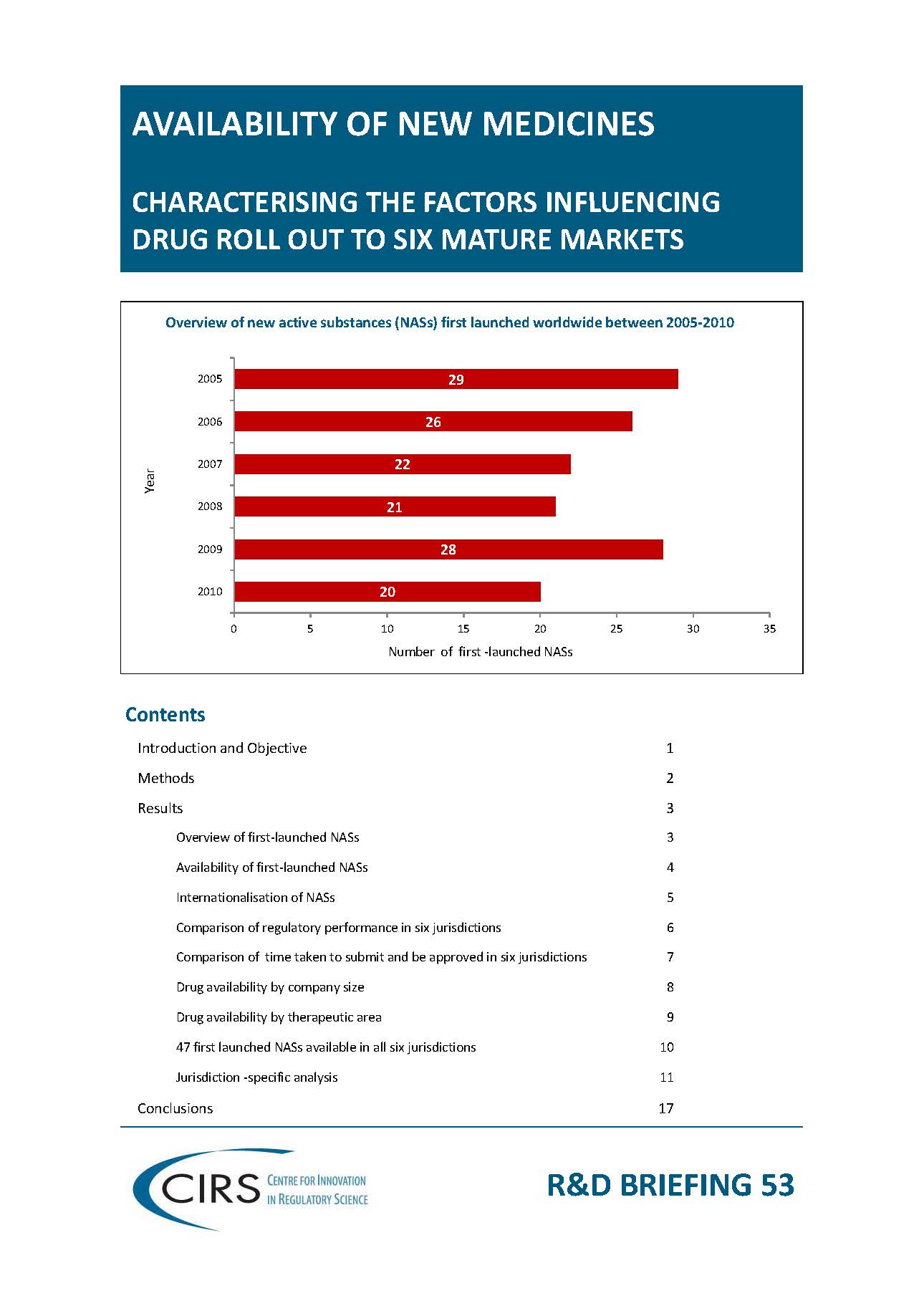
Objective: To review NASs first launched between 2005‐2010 and to determine their regulatory status as of 31 December 2012 in USA, Europe, Japan, Canada, Switzerland and Australia to identify [...]
Active Substances (NASs) approved by both the FDA and PMDA represented the largest number of new medicines approved this decade. Regulatory approvals by EMA were lower than the other [...]
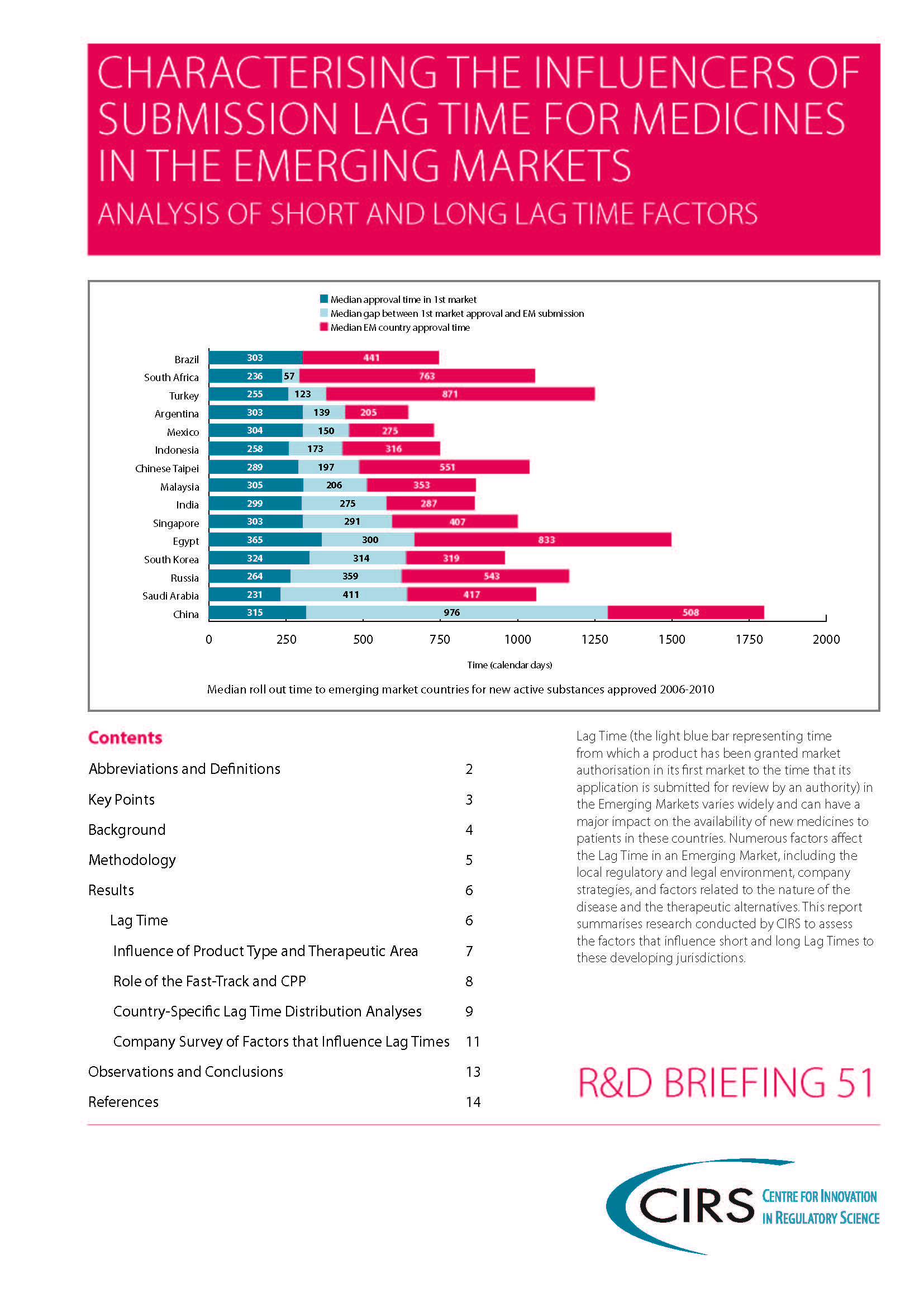
Lag Time (the time from which a product has been granted market authorisation in its first market to the time that its application is submitted for review by an [...]
In 2011, the number of New Active Substances (NASs) approved in all the ICH countries increased compared to 2010, and FDA represented the largest number of new medicines approved [...]
The Institute for Regulatory Science is currently involved in several activities related to quality as it applies to regulatory submissions and procedures, rather than the more conventional association with [...]
The emerging markets of Asia-Pacific, the Middle East, Africa and Latin America are becoming increasingly important to pharmaceutical companies in their global strategies for the registration of new medicines [...]
The Regulatory Agencies in Latin America share a common goal with the research-based pharmaceutical companies that they regulate. This is to ensure that new medicines become available to patients [...]
The regulatory agencies in the Middle East and African region that were included in this study share a common goal with the research-based pharmaceutical companies that they regulate. This [...]
The regulatory agencies in South East Asia and the Western Pacific share a common goal with the research-based pharmaceutical companies that they regulate. This is to ensure that new [...]