
Publications
CIRS publishes insights from its research and meetings in several forms:
- R&D Briefings – research papers produced by the CIRS team e.g. annual regulatory and HTA benchmarking briefings
- Journal articles – peer reviewed academic research papers
- Reports – from CIRS workshops and externally commissioned research projects, as well as CIRS Annual Reports
- Books – research theses from CIRS-supported PhD students
- Posters – presented at external conferences
Keep up-to-date with CIRS publications and activities by signing up to our mailing list or following CIRS on LinkedIn.

China-Origin Medicines Entering EU JCA: What Do Their Internationalisation Pathways Mean for HTA Readiness?
Overview Between January 2025 and June 2026, 20 medicinal products entered the EU Joint Clinical Assessment (JCA) process, including seven medicines developed primarily by Chinese companies. These products represent some …
CIRS R&D Briefing 107 – Review of HTA Outcomes and Timelines in Australia, Canada, Europe and the UK (2021-2025)
The latest HTADock R&D Briefing examines HTA outcomes and timelines for new active substances reviewed between 2021 and 2025 by 12 HTA agencies across Australia, Canada, Europe, and the UK. …

Evaluation of the UMBRA benefit-risk framework by ZAMRA – Chisha et al 2026
Transparent and consistent benefit-risk assessment is fundamental to regulatory decision making and stakeholder confidence in medicines regulation. This study evaluated the application of the Universal Methodology for Benefit-Risk Assessment (UMBRA) …

Assessing the implementation of regulatory reliance in Latin America
How effectively are regulatory authorities in Latin America implementing regulatory reliance in practice? This report presents findings from the first phase of a CIRS research project, showing that reliance is …

Patient Involvement in the Asia Pacific – 2026 Workshop Report
This CIRS multi-stakeholder workshop examined strategies for embedding meaningful patient engagement and patient experience data in regulatory and HTA processes in the Asia-Pacific.

Good Review Practices at the Zambian Medicines Regulatory Authority
Good Review Practices (GRevPs) are an important component of regulatory systems strengthening and support progress in World Health Organization (WHO) Global Benchmarking Tool (GBT) assessment. This poster was presented at …

From vision to reality: Two decades of progress in global drug development and regulatory innovation
Twenty years ago, participants at a CIRS workshop explored ideas that at the time appeared ambitious, including rolling reviews, facilitated regulatory pathways, collaborative assessments and real-time data sharing. Many of …
African Medicines Agency (AMA): Origins, Evolution and Future Prospects
This poster was presented at DIA 2026 and examines the development of the African Medicines Agency (AMA), tracing its evolution from the African Medicines Regulatory Harmonisation (AMRH) Programme to its …

CIRS 2025 Annual Report
The CIRS 2025 Annual Report highlights a year of independent research, global stakeholder engagement and evidence-based insights aimed at advancing regulatory and health technology assessment (HTA) policies and processes. Inside the …
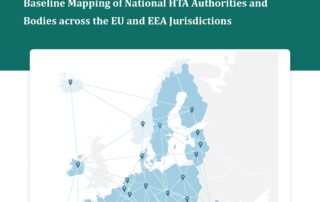
CIRS R&D Briefing 105 – HTA Landscape under the EU HTA Regulation
Baseline mapping of national HTA authorities across the EU and EEA The EU Health Technology Assessment Regulation (HTAR) has moved from policy to practice, with Joint Clinical Assessments (JCAs) now …
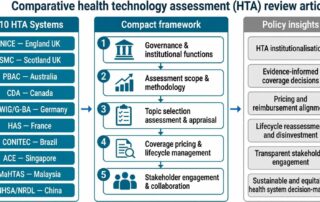
Comparative review of 10 HTA systems – Dai 2026
Overview Health technology assessment (HTA) plays a key role in supporting evidence-informed healthcare decision making, pricing, reimbursement, and coverage decisions worldwide. As countries seek to strengthen health policy and resource …
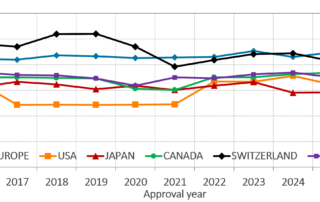
CIRS RD Briefing 106 – New drug approvals by six major authorities 2016-2025
Overview This R&D Briefing presents the Centre for Innovation in Regulatory Science (CIRS) annual analysis of new active substance (NAS) approvals by six major regulatory authorities: the European Medicines Agency …