HTA Workstream

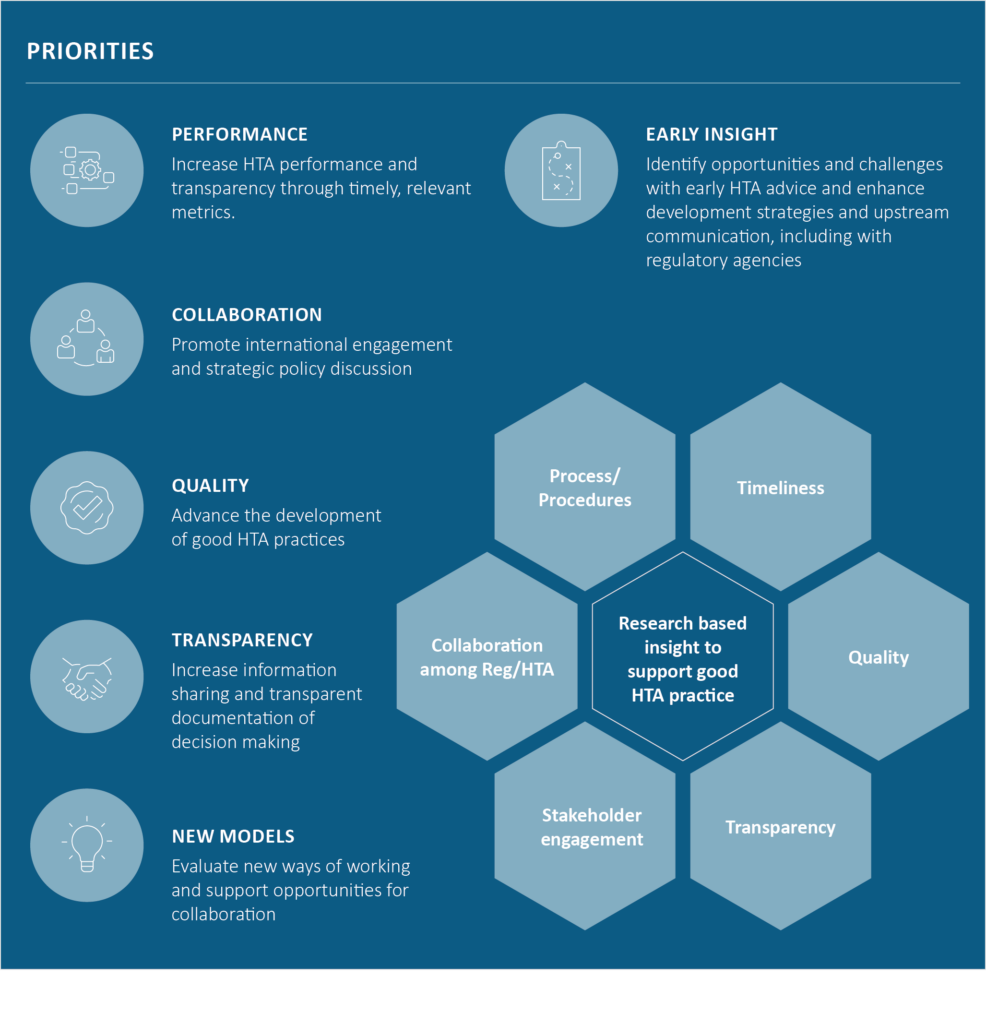
Goal: Provide a neutral forum for the evolution of the global HTA environment by advancing the process and policies that improve the effectiveness, efficiency and decision making of companies and HTA agencies in improving access to new medicines.

Find out more about our work and plans for 2025:

Download Research Agenda

Frequently asked questions (FAQs)

Health technology assessment (HTA) is a multidisciplinary process that uses explicit methods to determine the value of a health technology at different points in its lifecycle (O’Rourke 2020). The purpose is to inform decision making in order to promote an equitable, efficient, and high-quality health system. 

Over the past decade, HTA has evolved from a traditionally downstream decision focused on reimbursement to an increasingly upstream enabler shaping evidence generation and development strategy. Through its research and convening power, CIRS has tracked and supported this evolution, highlighting how HTA agencies are embedding themselves earlier in the development process, engaging in scientific advice, and collaborating more closely with regulatory counterparts.  

Metrics help pharmaceutical companies and HTA agencies to benchmark their performance and identify where improvements can be made. Through its metrics research programmes—such as HTADock and the HTA Industry Metrics Programme —CIRS supports HTA agencies and companies in using data to enable evidence-based decision making, strengthen HTA processes, and accelerate patient access to medicines globally. 

Early HTA advice provides value to pharmaceutical companies during drug development by identifying potential data gaps, refining study designs, and improving understanding of HTA agencies’ evidentiary requirements (Wang 2025). CIRS has monitored the evolution of HTA advice landscape and fostered cross-company learning through various research projects and the HTA Industry Metrics Programme.